Korean skincare labels read like a chemistry exam. But you don’t need to know forty ingredients — just a few that actually carry the routine. Here are four that matter in 2026, what each one is for, and whose skin it suits.
PDRN — the repair buzzword
PDRN (polydeoxyribonucleotide) is made from fragments of DNA, and it started life in medicine for wound healing before becoming Korea’s most-hyped anti-aging ingredient. The reputation is around skin repair and firmness — it’s aimed at skin that feels tired, stressed, or like it’s lost a little bounce. It’s the ingredient you’ll see splashed across 2026 serums and creams.
Snail mucin — the gentle all-rounder
Snail mucin (snail secretion filtrate) is a K-beauty classic for a reason: it’s hydrating, repairing, gentle, and cheap, which makes it close to perfect for beginners. In 2026 you’ll see it paired with PDRN in “recovery” lines that lean on both for an extra regeneration push. If you only try one Korean specialty ingredient, this is the low-risk place to start.
Centella (cica) — the calming one
Centella asiatica — often labeled “cica” — contains compounds like madecassoside that help calm redness and soothe irritation. It’s the go-to for skin that’s reactive, sensitive, or flushed. If your face gets angry easily, look for cica on the label.
Ceramides — the barrier fixer
Ceramides are fats your skin already makes to hold its barrier together and lock moisture in. Topping them up helps dry, tight, flaky skin feel comfortable again. Less flashy than PDRN, but quietly one of the most useful things you can put on dry skin.
How to actually use this
Don’t chase all four. Match one to your main concern:
- Tired, aging-feeling skin → PDRN
- Want easy hydration and repair → snail mucin
- Redness and sensitivity → centella / cica
- Dryness and a weak barrier → ceramides
Pick the serum that targets your issue, give it a few weeks, and don’t pile on five actives at once. Simple and consistent beats a crowded shelf.
This is general skincare information, not medical advice. Patch-test new products, and see a dermatologist for ongoing skin concerns.
How to layer them (and what to skip)
Knowing the ingredients is half of it; using them sanely is the other half. The simple rule is thin to thick: after cleansing, apply the watery steps first (toner, essence), then your treatment serum, then seal with moisturizer — and sunscreen last in the morning. Most of these heroes get along: snail mucin, centella, and ceramides are all gentle enough to layer daily.
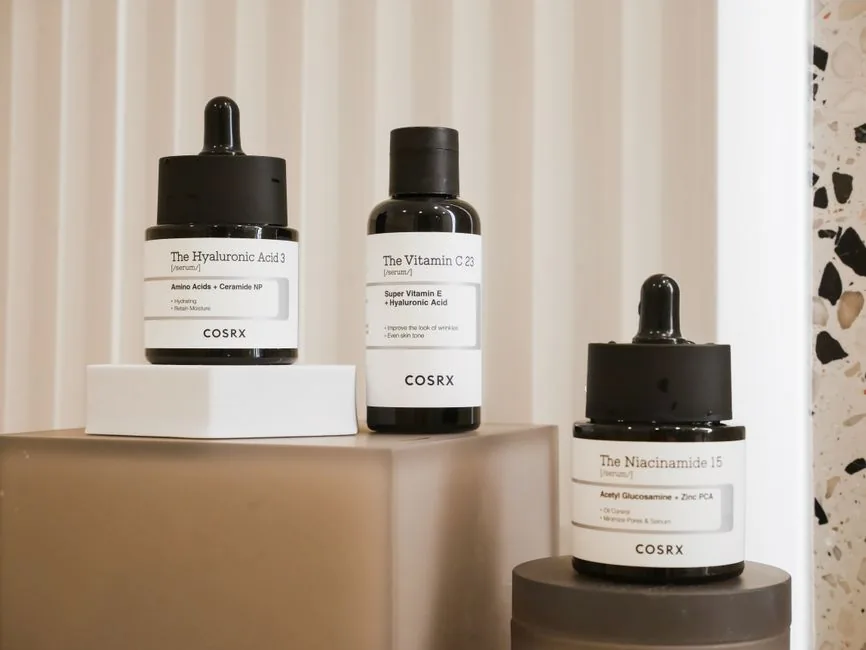
A few more names you’ll keep seeing, worth a line each: niacinamide (brightening and oil-balancing), hyaluronic acid (a humectant that pulls in water for plumpness), and propolis (a soothing, mildly antibacterial bee-derived ingredient). You don’t need all of them — they’re supporting players around the four headliners.
The most important habit is patch testing. Before putting a new active all over your face, dab a little on your inner arm or jaw for a few days and watch for redness or stinging. Introduce one new product at a time, too — start three at once and react, and you’ll have no idea which one did it.
Finally, what to be cautious with. Strong actives like high-strength vitamin C, retinoids, and exfoliating acids are powerful but easy to overuse; add them slowly rather than stacking on day one. And if your skin runs reactive, added fragrance is the single most common irritant worth avoiding. When in doubt, a few ingredients used consistently beats a shelf of half-finished bottles.
FAQ
Which ingredient is best for sensitive skin? Centella (cica) — it’s known for calming redness and soothing irritation, so it suits reactive skin.
Is snail mucin safe and is it vegan? It’s widely considered gentle and beginner-friendly, but it’s an animal-derived ingredient, so it isn’t vegan.
What does PDRN do? It’s a DNA-fragment ingredient popular in 2026 for its skin-repair and firming reputation, aimed at tired or stressed skin.
Can I use these ingredients together? Yes — snail mucin, centella, and ceramides are gentle and layer well daily, thin to thick. Just introduce one new product at a time and patch-test first, and add strong actives like retinoids or vitamin C slowly rather than all at once.
Which ingredient should a beginner start with? Snail mucin. It’s gentle, hydrating, affordable, and hard to react to, which makes it the lowest-risk way to try a Korean specialty ingredient before you reach for anything stronger.
Putting it all together? See the Korean skincare routine in 2026.
About the author — Jae is a Seoul-based writer at K-Culture Log, helping newcomers get into Korean culture without the overwhelm.